In today’s demanding world, where deadlines loom and notifications never stop, finding moments of peace can feel impossible. Yet, within this chaos lies a powerful solution that has supported countless individuals for thousands of years: yoga for stress relief. This ancient practice offers modern professionals a sanctuary, a way to step off the treadmill of constant productivity and reconnect with inner stillness. Through gentle movements, mindful breathing and purposeful presence, yoga for stress relief provides not just temporary escape, but genuine transformation in how we respond to life’s pressures.
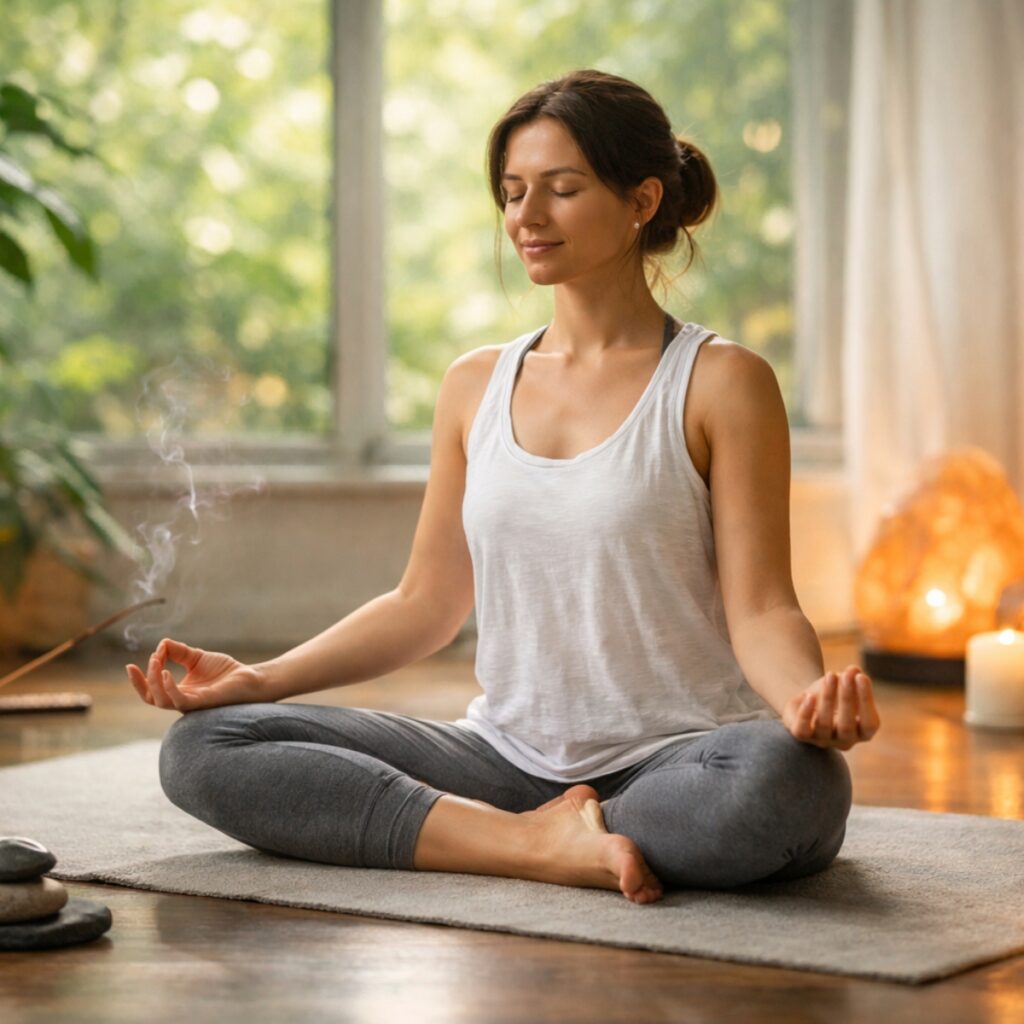
Table of Contents
Understanding How Yoga Calms Your Nervous System
When stress becomes your constant companion, your body remains in a perpetual state of alert. Your nervous system, designed to protect you from immediate danger, struggles to distinguish between a looming work presentation and a genuine threat. This is where yoga for stress relief becomes remarkably effective, it speaks directly to your nervous system in a language it understands.
The Science Behind the Serenity
Your autonomic nervous system operates through two primary branches: the sympathetic (your “fight or flight” response) and the parasympathetic (your “rest and digest” mode). Chronic stress keeps you locked in sympathetic dominance, flooding your body with cortisol and adrenaline. Yoga for stress relief activates your parasympathetic nervous system through specific mechanisms that researchers have documented extensively.
When you practise gentle yoga poses combined with conscious breathing, something remarkable happens. Your heart rate begins to slow. Your blood pressure decreases. The tension held in your shoulders, jaw and belly starts to release. This isn’t simply relaxation, it’s a fundamental shift in your physiological state. Through consistent practice, yoga for stress relief rewires your stress response patterns, creating new neural pathways that favour calm over chaos.
The vagus nerve, which runs from your brainstem through your body, plays a central role in this transformation. Often called the “wandering nerve,” it influences everything from your heart rate to your digestion. Certain yoga practices, particularly slow, deep breathing and gentle forward folds, stimulate vagal tone, enhancing your body’s natural ability to self-soothe and recover from stress.
Breath as Your Anchor
Perhaps nothing demonstrates the power of yoga for stress relief more clearly than pranayama, the practice of breath control. Your breath serves as a bridge between your conscious and unconscious mind, between your body and your thoughts. When stress overwhelms you, your breathing becomes shallow and rapid, signalling danger to every cell in your body.
Through yoga, you learn to reverse this pattern. Simple techniques like diaphragmatic breathing, where you breathe deeply into your belly rather than your chest, immediately signal safety to your nervous system. Extended exhales, where you breathe out for longer than you breathe in, activate your parasympathetic response with remarkable efficiency.
One particularly effective technique for busy professionals is alternate nostril breathing, or Nadi Shodhana. This gentle practice balances the right and left hemispheres of your brain, quiets mental chatter and creates a profound sense of equilibrium. Just five minutes of this pranayama can shift your entire nervous system from agitation to tranquility.
Gentle Yoga Practices for Modern Life
You don’t need to twist yourself into complicated positions or spend hours on your mat to experience the benefits of yoga for stress relief. In fact, some of the most powerful practices are wonderfully simple and accessible, regardless of your fitness level or flexibility.
Morning Rituals for Centered Beginnings
Starting your day with even ten minutes of gentle yoga sets a completely different tone for the hours ahead. Before checking your phone or diving into your to-do list, try this calming sequence:
Begin in Child’s Pose (Balasana), allowing your forehead to rest on the mat or a cushion. This gentle forward fold immediately soothes your nervous system, creating a cocoon of safety where stress cannot easily reach. Breathe slowly and deeply, feeling your back body expand with each inhale.
Move into Cat-Cow stretches (Marjaryasana-Bitilasana), synchronizing movement with breath. This flowing sequence massages your spine, releases tension from your back and connects you to the present moment. The rhythmic quality of these movements becomes a moving meditation, washing away residual anxiety from sleep or pre-emptive worry about the day ahead.
Finish with a few minutes in Easy Pose (Sukhasana) or any comfortable seated position, practising simple awareness of your natural breath. Notice where you feel movement in your body as you breathe. This mindful observation, central to yoga for stress relief, trains your attention away from worries and toward present-moment experience.
Desk-Friendly Practices for Workday Wellness
You don’t need to roll out a mat in your office to benefit from yoga for stress relief throughout your workday. Several powerful practices adapt beautifully to your desk chair or a quiet corner:
Seated spinal twists release tension from your torso and refresh your perspective, literally and figuratively. Sitting tall, place your right hand on your left knee and your left hand behind you. Gently twist to the left, breathing deeply. Hold for several breaths, then switch sides. This simple movement wrings out stress like water from a cloth.
Shoulder rolls and neck releases address the areas where professionals commonly hold tension. Slowly roll your shoulders backward and forward, then gently tilt your head from side to side, breathing into any areas of tightness. These micro-practices, done throughout the day, prevent stress from accumulating in your body.
The practice of grounding, where you simply feel your feet firmly on the floor and notice the support beneath you, can be done anywhere, anytime. This aspect of yoga for stress relief reconnects you to stability when your mind feels scattered across multiple tasks and concerns.
Evening Wind-Down Sequences
As the day closes, yoga for stress relief helps you transition from doing to being, from productivity to rest. A gentle evening practice signals to your body that it’s safe to let go of the day’s tensions.
Legs-Up-the-Wall Pose (Viparita Karani) might be the ultimate stress-relief posture for modern life. Lie on your back near a wall, extending your legs up against it. This mild inversion reverses the effects of sitting or standing all day, reduces swelling in your legs and profoundly calms your nervous system. Stay here for five to fifteen minutes, breathing naturally, allowing gravity to do the work.
Supine twists release your spine and massage your internal organs, areas that hold tremendous stress. Lying on your back, draw your knees to your chest, then let them fall to one side while keeping your shoulders grounded. This gentle detoxifying posture helps process both physical and emotional tension.
End with Savasana (Corpse Pose), the ultimate posture of surrender. Lying flat on your back, arms slightly away from your body, palms facing up, you consciously release every muscle. This seemingly simple pose is actually one of the most challenging and important in yoga for stress relief. Here, you practise the art of non-doing, of simply being present without agenda or effort.
Building Your Personal Stress-Relief Practice
Creating a sustainable yoga for stress relief practice doesn’t require dramatic lifestyle changes or enormous time commitments. Instead, it asks for consistency, gentleness and a willingness to prioritize your wellbeing.
Start Where You Are
Perhaps you can dedicate only five minutes each morning. That’s perfect. Those five minutes, practised consistently, will transform your stress response more effectively than an hour-long session once a month. Yoga for stress relief meets you exactly where you are, with whatever time, energy and ability you currently possess.
Begin with what feels manageable and nourishing rather than overwhelming. If sitting still feels impossible, start with gentle movement. If you struggle with flexibility, use props like cushions, blocks, or blankets to support your body. The practice adapts to you; you need not conform to any idealized image of what yoga should look like.
Create Your Sacred Space
Your yoga practice doesn’t require a dedicated studio or expensive equipment, but it does benefit from intentionality. Choose a quiet corner of your home, anywhere you can roll out a mat or even just stand comfortably. This space becomes your refuge, a physical location your body and mind associate with peace and presence.
Consider elements that enhance your sense of calm: soft lighting, a candle, gentle music, or complete silence. Some practitioners find that incorporating aromatherapy, perhaps lavender for calming or eucalyptus for clarity, deepens their experience of yoga for stress relief.
Listen to Your Body’s Wisdom
One of the most profound teachings of yoga for stress relief is learning to honour your body’s signals rather than override them. In our achievement-oriented culture, we often push through discomfort, ignore fatigue and disconnect from our body’s wisdom. Yoga invites the opposite approach.
If a posture creates pain or significant discomfort, modify it or skip it entirely. If you feel exhausted, choose restorative poses over active sequences. Your practice should leave you feeling nourished, not depleted. This attunement to your body’s needs extends beyond your mat, helping you recognize stress signals earlier and respond with greater compassion.
Cultivate Consistency Over Intensity
The true power of yoga for stress relief emerges through regular practice rather than occasional marathon sessions. Your nervous system responds to repetition, gradually learning new patterns of response through consistent reinforcement.
Even on days when you feel too busy or stressed to practice, especially on those days, commit to just a few minutes. Three conscious breaths. One gentle stretch. A moment of stillness. These small deposits in your wellness account accumulate, creating a reserve of resilience you can draw upon when stress peaks.
Integrating Mindfulness Beyond the Mat
The ultimate goal of yoga for stress relief extends far beyond the physical practice. As you develop body awareness, breath consciousness and present-moment attention on your mat, these qualities naturally infuse your daily life.
You might notice yourself taking a conscious breath before responding to a difficult email. You could find yourself pausing to release shoulder tension during a stressful meeting. You may discover moments of appreciation for simple pleasures, warm sunlight, a genuine smile, the taste of your morning tea, that previously went unnoticed in your rush.
This integration represents yoga’s deepest gift: not escape from your fast-paced world, but a transformed relationship with it. Stress doesn’t disappear, but your response to it fundamentally changes. You develop what researchers call “stress resilience” the ability to meet challenges without becoming overwhelmed, to bend without breaking.
The Practice of Non-Reactivity
Through yoga for stress relief, you train a crucial skill: the pause between stimulus and response. When stress arises, a challenging email, an unexpected setback, a difficult conversation, you gain the capacity to pause, breathe and choose your response rather than reacting automatically.
This space, this brief moment of awareness before action, changes everything. In that pause lives your power to respond with wisdom rather than reactivity, with calm rather than panic, with perspective rather than overwhelm.
Compassion as Practice
Perhaps most importantly, yoga for stress relief teaches self-compassion. In a culture that often equates productivity with worth, giving yourself permission to rest, to move gently, to prioritize wellbeing can feel revolutionary.
Your yoga practice becomes a daily reminder that you are worthy of care, that your nervous system deserves support, that your peace matters. This self-compassion ripples outward, often improving your relationships, your work and your overall quality of life.
You may also read our blog “Beginner Yoga Practice: How to Start Your Practice Mindfully“
Moving Forward with Gentle Determination
As you continue your journey, you may also find reassurance in learning from teachers and programs aligned with globally recognised standards such as the Canadian Yoga Alliance. Their emphasis on authentic yoga education, ethical teaching and holistic wellbeing reflects the very essence of yoga for stress relief—safe, mindful and rooted in tradition while remaining relevant to modern life.
Whether you practise independently or under the guidance of certified instructors, remember that yoga is not about how it looks from the outside, but how it feels within. Each conscious breath, each gentle movement and each moment of awareness brings you closer to balance, resilience and inner calm—qualities that no external pressure can take away.