If you spend hours hunched over a keyboard, you’re not alone. Millions of Canadians working desk jobs experience the uncomfortable reality of neck and shoulder pain. The good news? Yoga for neck and shoulder pain is a gentle, proven practice designed specifically for desk job relief that can transform your workday and restore comfort to your upper body.
This comprehensive guide will walk you through a peaceful yoga for neck and shoulder pain routine that melts away tension.
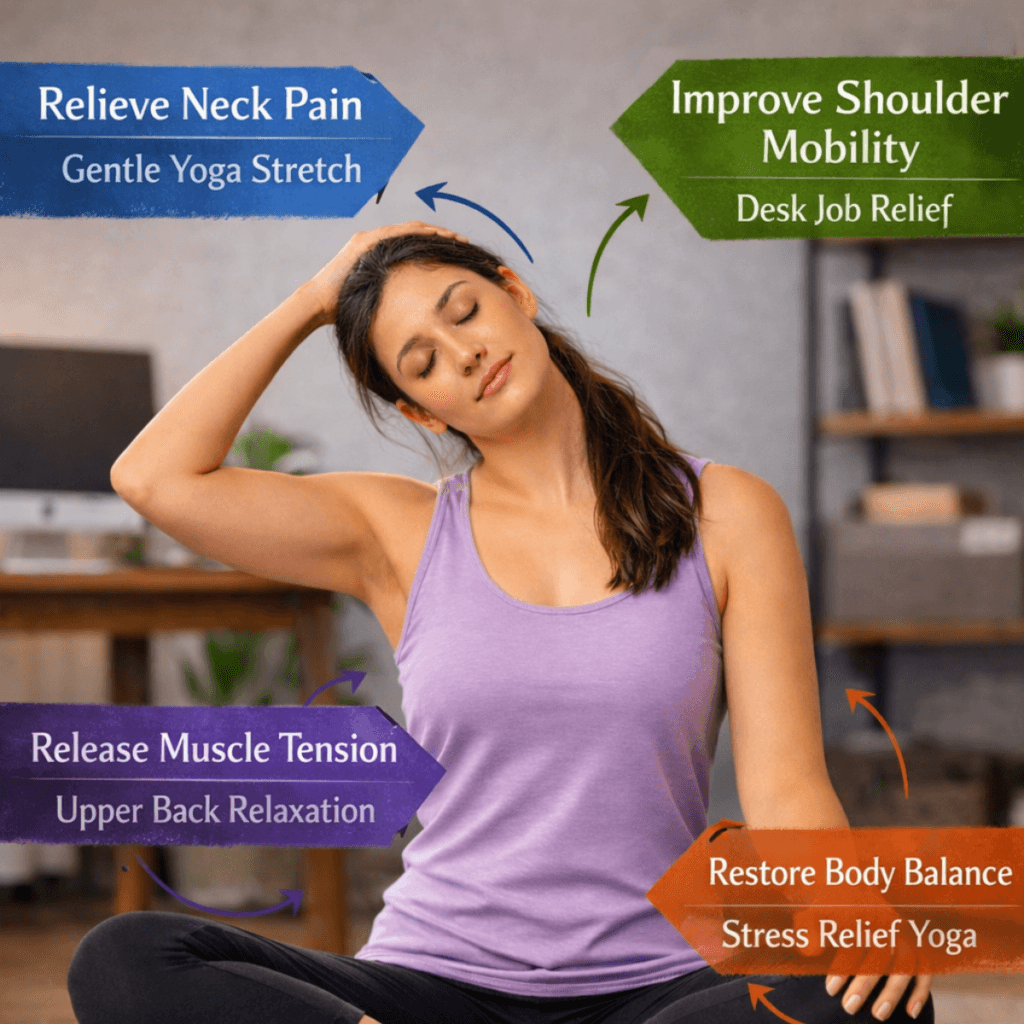
Table of Contents
Understanding Neck and Shoulder Pain from Desk Work
Before we explore the healing poses, let’s understand why desk work creates such discomfort in our bodies.
Common causes of desk related pain include:
- Prolonged forward head posture while looking at screens
- Rounded shoulders from typing and mouse work
- Limited movement throughout the day
- Stress and tension holding patterns
- Inadequate ergonomic setup
- Shallow breathing due to compressed posture
When we sit for extended periods, our muscles become tight and fatigued. The trapezius muscles, which run along your shoulders and neck, bear the brunt of poor posture. Meanwhile, chest muscles shorten, pulling your shoulders forward and creating a cycle of discomfort. Yoga for neck and shoulder pain offers a natural, gentle solution that addresses both the physical tension and the mental stress contributing to your discomfort.
Benefits of Yoga for Neck and Shoulder Pain for Desk Workers
Regular yoga for neck and shoulder pain can help desk workers reduce stiffness and improve posture.
Physical benefits:
- Releases muscular tension in the neck, shoulders and upper back
- Improves flexibility and range of motion
- Strengthens postural support muscles
- Increases blood circulation to tight areas
- Reduces inflammation and promotes healing
- Corrects forward head posture
- Opens the chest and improves breathing capacity
Mental and emotional benefits:
- Reduces stress and anxiety
- Promotes mindful awareness of body positioning
- Encourages regular movement breaks
- Improves focus and concentration
- Creates a sense of calm and well being
- Develops body mind connection
Your Gentle Desk Job Relief Yoga Routine
This soothing sequence of yoga for neck and shoulder pain can be practiced daily, either at your desk or on a yoga mat.
1. Seated Neck Rolls (2-3 minutes)
Begin by sitting comfortably with your spine tall and shoulders relaxed.
How to practice:
- Drop your right ear toward your right shoulder
- Slowly roll your chin down toward your chest
- Continue the circular motion, bringing your left ear toward your left shoulder
- Roll your head back to centre
- Repeat 3-4 times in each direction
- Move with your breath, inhaling as you lift and exhaling as you lower
This gentle movement releases tension and improves circulation in the neck muscles.
2. Shoulder Shrugs and Rolls (2 minutes)
For shoulder shrugs:
- Inhale deeply and lift both shoulders toward your ears
- Hold for 2-3 seconds
- Exhale completely and drop shoulders down with a sigh
- Repeat 8-10 times
For shoulder rolls:
- Roll shoulders backward in large circles
- Complete 5-8 repetitions
- Reverse direction, rolling forward
- Complete 5-8 repetitions
These movements release trapped tension and remind your shoulders where they naturally belong.
3. Eagle Arms (Hold 30-60 seconds each side)
This pose stretches the upper back and shoulder blades beautifully.
How to practice:
- Extend both arms forward at shoulder height
- Cross your right arm over your left at the elbows
- Bend elbows and bring palms together (or backs of hands touch)
- Lift elbows slightly while dropping shoulders away from ears
- Hold and breathe deeply
- Release and repeat on the opposite side
You’ll feel a wonderful stretch between your shoulder blades where tension often hides.
4. Cow Face Arms (Hold 30-60 seconds each side)
This pose provides a deep shoulder stretch and opens the chest.
How to practice:
- Reach your right arm overhead
- Bend the elbow, bringing your right hand down between your shoulder blades
- Reach your left arm behind your back
- Bend that elbow, bringing your left hand up between your shoulder blades
- Try to clasp your fingers (use a strap if needed)
- Keep your spine tall and breathe into the stretch
- Switch sides and repeat
Don’t worry if your hands don’t meet initially. With regular practice, flexibility improves naturally.
5. Thread the Needle (Hold 45-60 seconds each side)
This gentle twist releases tension in the shoulders and upper back.
How to practice:
- Begin on hands and knees in tabletop position
- Slide your right arm underneath your left arm
- Lower your right shoulder and ear to the mat
- Keep your left hand planted or extend it forward
- Breathe deeply into your upper back
- Hold, then slowly return to centre
- Repeat on the opposite side
This pose provides a soothing massage effect for tight shoulder muscles.
6. Cat-Cow Stretch (8-10 rounds)
This flowing movement mobilizes the entire spine while releasing neck and shoulder tension.
Cat-Cow is one of the most effective movements in yoga for neck and shoulder pain routines.
How to practice:
- Start in tabletop position with hands under shoulders
- Inhale, drop your belly, lift your chest and gaze (Cow pose)
- Exhale, round your spine, tuck your chin (Cat pose)
- Flow between these positions with your breath
- Move slowly and mindfully
Cat-Cow improves spinal flexibility and brings awareness to postural habits.
7. Puppy Pose (Hold 1-2 minutes)
This restful pose melts tension from shoulders while gently stretching the spine.
How to practice:
- From tabletop, walk your hands forward
- Keep your hips over your knees
- Lower your chest toward the mat
- Rest your forehead on the ground or a block
- Breathe deeply, allowing gravity to deepen the stretch
- Feel your shoulders opening with each exhale
Puppy pose offers profound relief after hours of desk work.
8. Seated Spinal Twist (Hold 30-45 seconds each side)
Twists release tension and improve mobility throughout the torso.
How to practice:
- Sit tall in your chair or on the floor
- Inhale to lengthen your spine
- Exhale and twist gently to the right
- Place your left hand on your right knee
- Look over your right shoulder
- Hold and breathe
- Return to centre and repeat on the left side
Twists create space between vertebrae and release accumulated stress.
9. Chest Opener at the Wall (Hold 1-2 minutes each side)
This pose counteracts the forward shoulder position from desk work.
How to practice:
- Stand beside a wall
- Extend your right arm along the wall at shoulder height
- Slowly turn your body away from the wall
- Feel the stretch across your chest and front shoulder
- Breathe deeply and hold
- Switch sides
Opening the chest allows for fuller breathing and better posture.
10. Supported Fish Pose (Hold 2-3 minutes)
End your practice with this deeply restorative pose.
How to practice:
- Place a rolled blanket or bolster lengthwise on your mat
- Lie back so the prop supports your spine
- Allow your arms to rest comfortably at your sides
- Let your shoulders melt toward the floor
- Close your eyes and breathe naturally
- Rest in this gentle heart opener
This pose reverses the effects of hunching and promotes deep relaxation.
Creating Your Daily Practice Routine
Consistency matters more than duration when addressing neck and shoulder pain. Here’s how to integrate this yoga practice into your busy workday.
Morning practice (10-15 minutes):
Set your day up for success with gentle stretches before sitting at your desk. Focus on neck rolls, shoulder shrugs and Cat-Cow to prepare your body.
A daily yoga for neck and shoulder pain practice can significantly improve mobility and reduce stiffness caused by long hours of desk work.
Midday break (5-10 minutes):
Pause your work for a quick reset. Eagle arms, seated twists and shoulder rolls can be done right at your desk.
Evening practice (15-20 minutes):
Release accumulated tension with a fuller sequence including Thread the Needle, Puppy Pose and Supported Fish Pose.
Micro-breaks every hour:
Set a gentle reminder to move every 60 minutes. Simple neck rolls and shoulder shrugs take less than two minutes and prevent tension buildup.
Additional Tips for Desk Job Relief
Yoga works beautifully alongside other healthy habits.
Combining ergonomic improvements with yoga for neck and shoulder pain creates better long-term relief.
Optimize your workspace:
- Adjust your monitor to eye level
- Keep your keyboard and mouse close
- Use a supportive chair with proper lumbar support
- Position your feet flat on the floor
- Maintain a neutral wrist position
Practice mindful posture:
- Check in with your body throughout the day
- Notice when shoulders creep toward ears
- Regularly reset to neutral spine alignment
- Take deep belly breaths to reduce stress holding
Stay hydrated and nourished:
- Drink water regularly throughout the day
- Eat anti inflammatory foods
- Limit caffeine which can increase muscle tension
- Consider magnesium rich foods for muscle relaxation
Incorporate other movement:
- Take walking breaks when possible
- Use stairs instead of elevators
- Park farther away from entrances
- Stand during phone calls
- Stretch while waiting for coffee or photocopies
When to Seek Professional Help
While yoga for neck and shoulder pain provides significant relief for many people, certain symptoms require medical attention.
Consult a healthcare provider if you experience:
- Sharp, shooting pain down your arms
- Numbness or tingling in hands or fingers
- Pain that worsens despite regular yoga practice
- Severe headaches accompanying neck pain
- Difficulty moving your neck or shoulders
- Pain following an injury or accident
A physiotherapist, chiropractor or massage therapist can work alongside your yoga practice to address specific issues.
The Mind-Body Connection in Pain Relief
Physical tension and emotional stress exist in an interconnected loop. Desk job related pain often stems not just from poor posture but from mental stress manifesting in the body. Yoga addresses both aspects simultaneously. As you breathe deeply and move mindfully, you’re signalling your nervous system to shift from stress mode to rest mode. This parasympathetic activation allows muscles to release their protective grip. Many therapists recommend yoga for neck and shoulder pain to release stress stored in the upper body.
Breathing techniques for pain relief:
Practice these simple breathing exercises throughout your workday.
- Deep belly breathing: Place one hand on your belly, breathe deeply for a count of four, hold briefly, exhale for six
- Shoulder release breath: Inhale while lifting shoulders, exhale with an audible sigh while dropping them
- Extended exhale: Breathe in for four counts, out for eight counts to activate relaxation response
Building Long-Term Wellness
Healing neck and shoulder pain isn’t about a quick fix. It’s about developing sustainable habits that support your body’s natural alignment and vitality.
Keys to lasting relief:
- Practice yoga consistently, even on days you feel good
- Listen to your body’s signals before pain becomes severe
- Celebrate small improvements in flexibility and comfort
- Be patient with your progress
- Modify poses as needed for your current abilities
- Remember that rest is part of the healing process
You may read our blog “Yoga for Beginners Who Feel Stiff, Unfit or Not Flexible“
Your Journey to Pain-Free Living
Every yoga practice is an act of self care and compassion. Each time you pause to stretch, breathe and reconnect with your body, you’re investing in your long term wellbeing. With regular yoga for neck and shoulder pain, desk workers can prevent chronic discomfort and improve overall posture. With this gentle yoga routine practiced regularly, you can experience significant relief and prevent future discomfort.
Start where you are today. Even five minutes of mindful movement creates positive change. As you develop your practice, you’ll notice not just physical relief but also improved mental clarity, reduced stress and a deeper sense of peace. Your body is designed to move, breathe and feel good. Yoga for neck and shoulder pain simply reminds your muscles, joints and nervous system of their natural state of ease.
Begin your journey toward desk job relief today. Your neck and shoulders will thank you.
Join Simar Yoga Academy – Certified by the Canadian Yoga Alliance
Simar Yoga Academy stands as a trusted destination for those seeking genuine, professionally recognised yoga education. Accredited by the Canadian Yoga Alliance, the academy upholds globally accepted standards of training ensuring every student learns within a structured, rigorous, and internationally credible framework.
The curriculum thoughtfully blends classical yogic teachings with contemporary wellness insight, offering students a comprehensive understanding of yoga far beyond the physical postures as a complete discipline for mental, emotional, and physical transformation.
Whether you’re looking to enrich your personal practice or step into a fulfilling career as a yoga instructor, Simar Yoga Academy offers the ideal environment to grow. With hands-on training, personalised guidance, and a certification recognised worldwide, you’ll graduate fully equipped to make your mark in the global yoga community.