Starting yoga can feel like stepping into something new and peaceful, but it can also feel confusing at first. If you have ever searched for yoga online, you may have seen many different styles, routines and opinions. Some classes look intense, some look slow and some seem designed only for people who are already flexible.
If you are a beginner, it is completely normal to feel unsure about where to start. You might be wondering what yoga actually means, whether you need special equipment, how often you should practise and how to avoid doing something unsafe.
This guide is written to help you begin with clarity and calmness. You will learn what yoga truly means, how to clear common beginner confusion and how to build a safe and gentle beginner yoga practice that fits your body and your lifestyle. This is not about pushing yourself into difficult poses. It is about creating a steady and supportive foundation that you can continue long term.
Yoga does not ask you to be perfect. It simply invites you to show up, breathe and begin where you are.
Table of Contents
What Yoga Truly Means (Beyond Stretching and Poses)
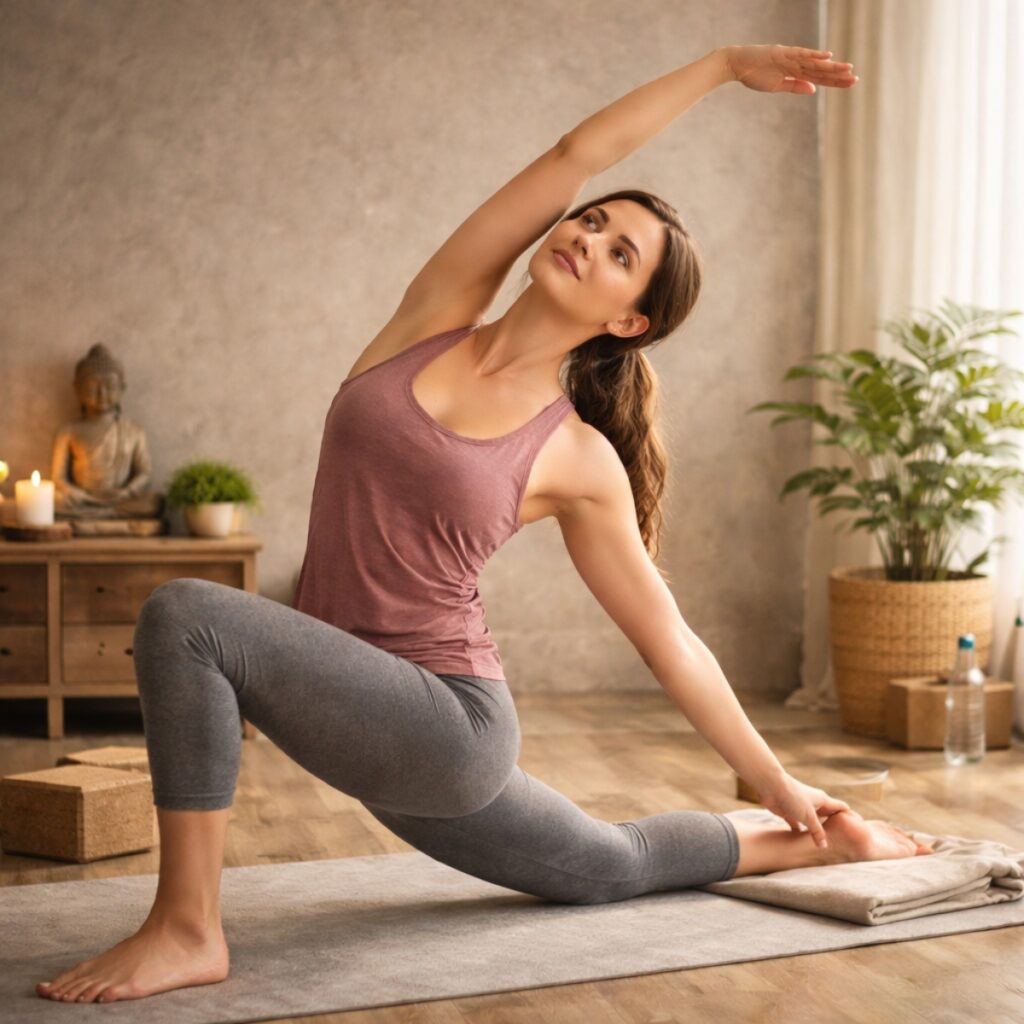
Yoga is often described as stretching or exercise, but its meaning is much deeper than that. Yoga is a practice that brings together the body, the breath and the mind. It helps you move with awareness, breathe with intention and develop a calm relationship with your thoughts.
In daily life, many people live in a constant rush. The body feels tight, the mind feels busy and stress becomes normal. Yoga offers a different pace. It creates space to slow down, notice your body and gently release tension.
A mindful beginner yoga practice is not about achieving perfect shapes. It is about learning how to listen to your body. It teaches you to move in a way that feels safe and supportive. Over time, yoga can improve posture, flexibility, balance and strength, but it also supports emotional wellbeing by helping you feel more grounded and present.
Yoga is also a practice of consistency. Small steps repeated over time create meaningful change. When you begin yoga gently, you allow your body to open naturally rather than forcing progress.
Why Beginners Often Feel Confused About Yoga
Yoga is welcoming, but the modern yoga world can sometimes feel overwhelming. Many beginners want to start, but they do not know which direction to take. This confusion is common and completely normal.
Too Many Yoga Styles to Choose From
One of the biggest reasons beginners feel unsure is the number of yoga styles available. You may see names like Hatha, Vinyasa, Yin, Restorative, Ashtanga, Power Yoga, or Hot Yoga. Each style has a different pace, intensity and purpose.
When you are starting a beginner yoga practice, you do not need to master yoga terminology. It is enough to choose something gentle and beginner-friendly. You can explore other styles later, once you feel more confident.
The Flexibility Myth
Many people believe they must be flexible to start yoga. This is one of the most common misunderstandings. Flexibility is not a requirement. Flexibility is something that improves through practice.
A safe beginner yoga practice is designed for people who feel stiff, tight, or new to movement. Yoga is not about how far you can stretch. It is about how well you can stay aware and comfortable in your body.
Feeling Pressure to Look a Certain Way
Social media can make yoga look like a performance. Some videos focus on advanced poses and perfect balance. This can make beginners feel like they are not doing yoga “correctly.”
The truth is that yoga is not about appearance. It is about experience. A mindful beginner yoga practice focuses on how you feel, not how you look.
Not Knowing What a “Good” Practice Feels Like
Beginners often wonder if yoga should feel intense or relaxing. The answer depends on the session, but a beginner practice should feel safe, steady and supportive.
It is normal to feel mild effort and gentle stretching. It is not normal to feel sharp pain or strain. A good beginner yoga practice helps you feel calmer and more comfortable in your body, even if you are still learning.
How to Start a Beginner Yoga Practice Mindfully
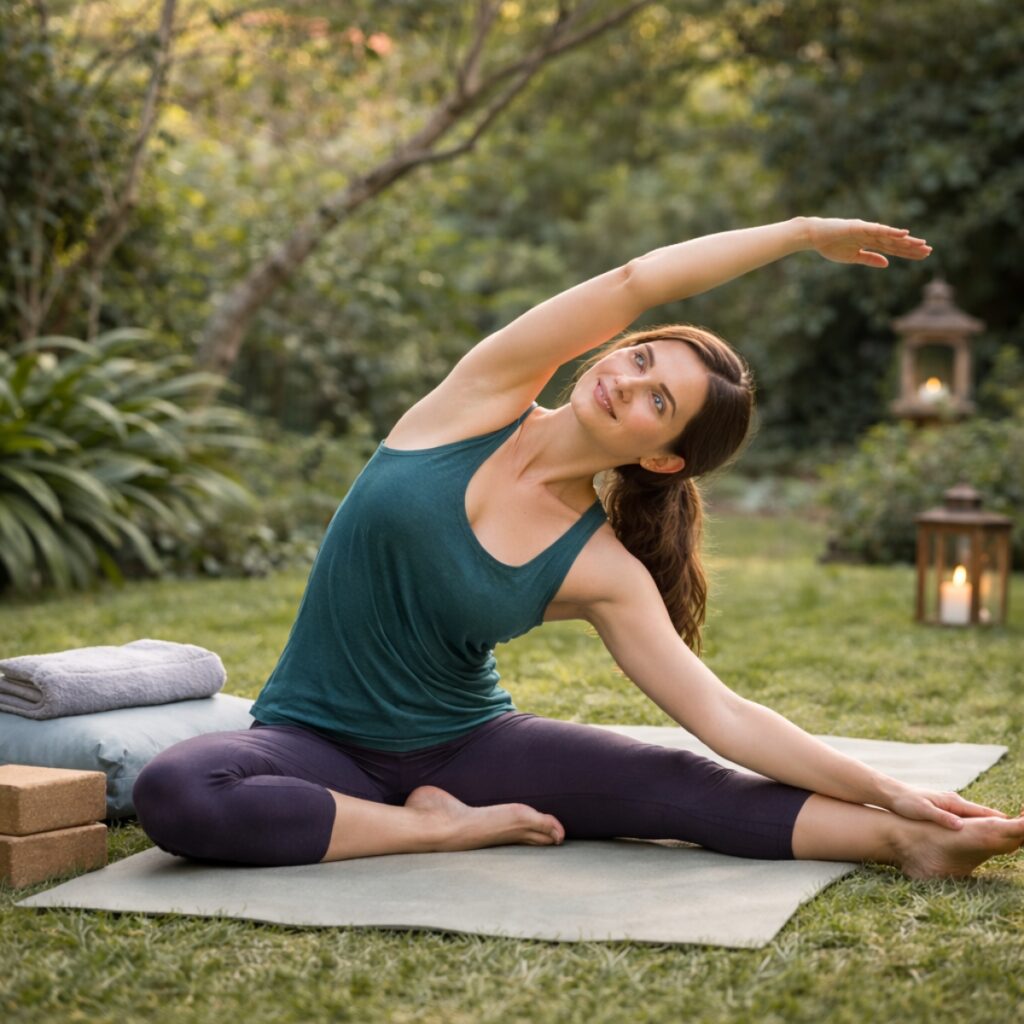
Mindful yoga means being present with what you are doing. It is not about doing more. It is about doing things with awareness.
A mindful beginner yoga practice includes:
- Moving slowly enough to stay in control
- Breathing steadily instead of rushing
- Listening to your body’s signals
- Modifying poses without guilt
- Resting when you need to
- Staying patient with progress
Mindfulness makes yoga safer and more enjoyable. It also helps you build confidence, because you begin to trust your own experience rather than relying only on external guidance.
How to Start Gently and Safely (Step-by-Step)
A safe start is one of the most important parts of yoga. When you begin gently, you reduce the risk of injury and increase the chance of building a long-term habit.
Start With Short Sessions
Many beginners think they need to practise for an hour to get results. In reality, short sessions are often more effective at the beginning because they feel manageable.
A realistic schedule for a beginner yoga practice might be:
- 10 to 15 minutes per session, 3 to 5 times per week
- 20 minutes per session, 3 times per week
Consistency matters more than duration. Even a short practice can improve flexibility, posture and stress levels when repeated regularly.
Choose Beginner-Friendly Yoga Styles
Not all yoga styles are ideal for beginners. Some styles are fast-paced and physically demanding. If your goal is to start safely, it helps to begin with slower styles.
Good choices for a beginner yoga practice include:
- Hatha Yoga (slow pace, basic poses, good foundation)
- Restorative Yoga (deep relaxation, supported poses)
- Yin Yoga (longer holds, gentle deep stretching)
- Slow Flow Yoga (gentle movement linked with breath)
You can explore stronger styles later. A gentle start builds the confidence you need.
Use Props to Support Your Body
Props are not a shortcut. They are a tool for comfort and safety. Many experienced yogis use props regularly.
Helpful props for a beginner yoga practice include:
- Yoga blocks
- A strap or towel
- A folded blanket
- A cushion or pillow
Props help you stay aligned, reduce strain and practise with better control.
Learn the Difference Between Stretching and Pain
Yoga can create sensations of stretching and mild effort. But yoga should never feel sharp or unsafe.
Safe sensations may include:
- Gentle stretching in muscles
- Mild warmth in the body
- Light challenge in strength poses
Unsafe sensations may include:
- Sharp pain in joints
- Tingling or numbness
- Pinching in the lower back or neck
- Sudden strain
A mindful beginner yoga practice respects your limits. If something feels wrong, you can ease out of the pose, modify it, or rest.
What You Need for Yoga (Simple Setup for Home)
Yoga does not require expensive equipment. You can begin with simple items and a small space.
For a comfortable beginner yoga practice, you may need:
- A yoga mat (or a non-slip surface)
- Comfortable clothing
- A quiet corner or open space
- Optional props like blocks, strap, or blanket
The goal is not to create a perfect environment. The goal is to create a space where you feel calm enough to practise.
The Importance of Breathing in a Beginner Yoga Practice
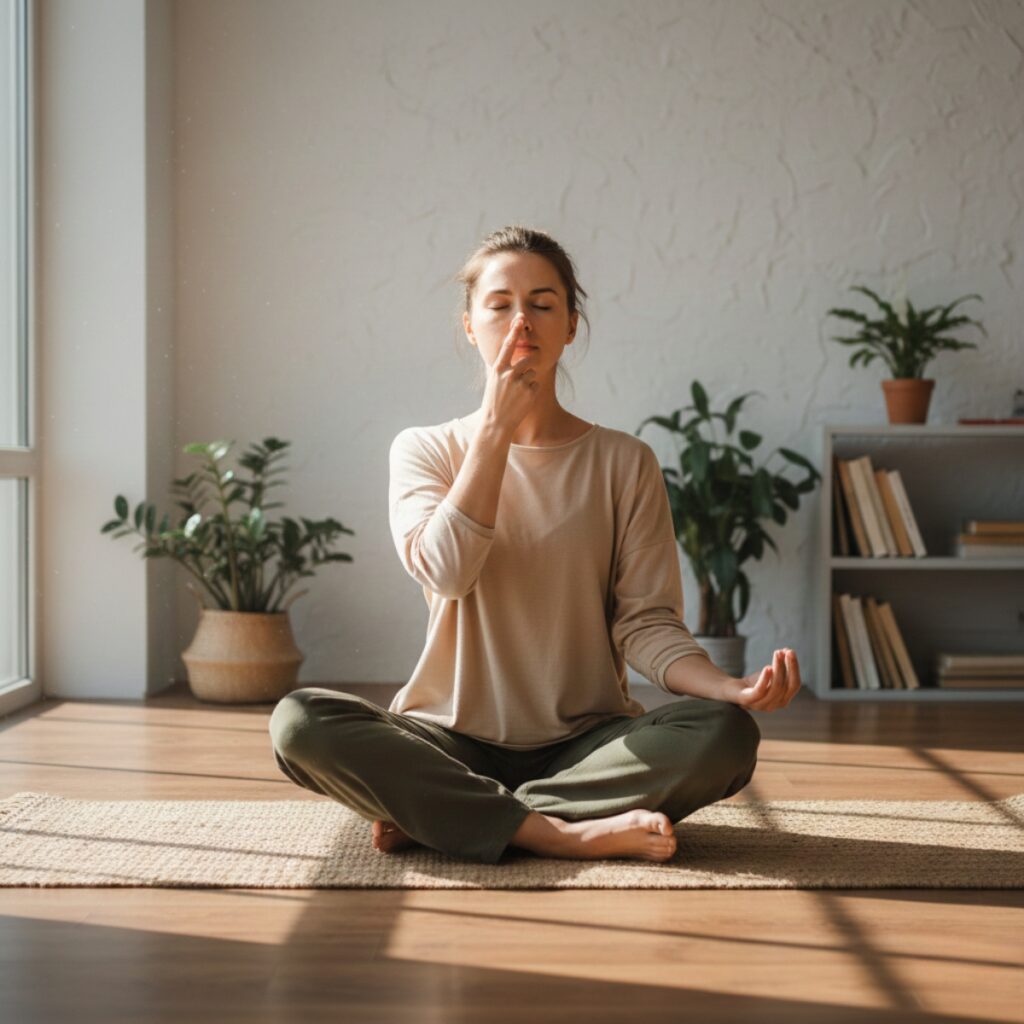
Breath is the foundation of yoga. It helps you move more smoothly, stay calm and avoid tension.
Beginners often hold their breath without realizing it, especially during unfamiliar poses. This is normal. The goal is to gently return to steady breathing.
A simple breathing method for your beginner yoga practice:
- Inhale through your nose slowly
- Exhale through our nose slowly
- Keep the breath soft and steady
- Avoid forcing deep breaths
Breathing creates rhythm. It also helps you stay present, which is the heart of mindful practice.
How Often Should Beginners Practise Yoga?
The best schedule is the one you can maintain without pressure. Yoga is more effective when it feels sustainable.
A good plan for a beginner yoga practice:
- Start with 3 sessions per week
- Move to 4 or 5 sessions as you feel comfortable
- Practise daily only if it stays gentle and enjoyable
Rest days are not failures. They are part of balance. Your body grows stronger through both movement and recovery.
Best Time to Practise Yoga (Morning, Evening, or Midday)
Yoga can fit into many lifestyles. The best time depends on your daily routine and energy levels.
Morning Yoga
Morning yoga helps reduce stiffness and supports focus for the day ahead. A short beginner yoga practice in the morning can improve posture and create a calm start.
Evening Yoga
Evening yoga helps release stress and tension. Gentle stretches and breathing can support better sleep. A slow beginner yoga practice at night is often deeply relaxing.
Midday Yoga
If you sit for long hours, midday yoga can refresh your body and mind. Even 10 minutes of movement can help reduce tightness and improve energy.
The best time is the time you can repeat consistently.
A Simple Beginner Yoga Practice Routine (12–18 Minutes)
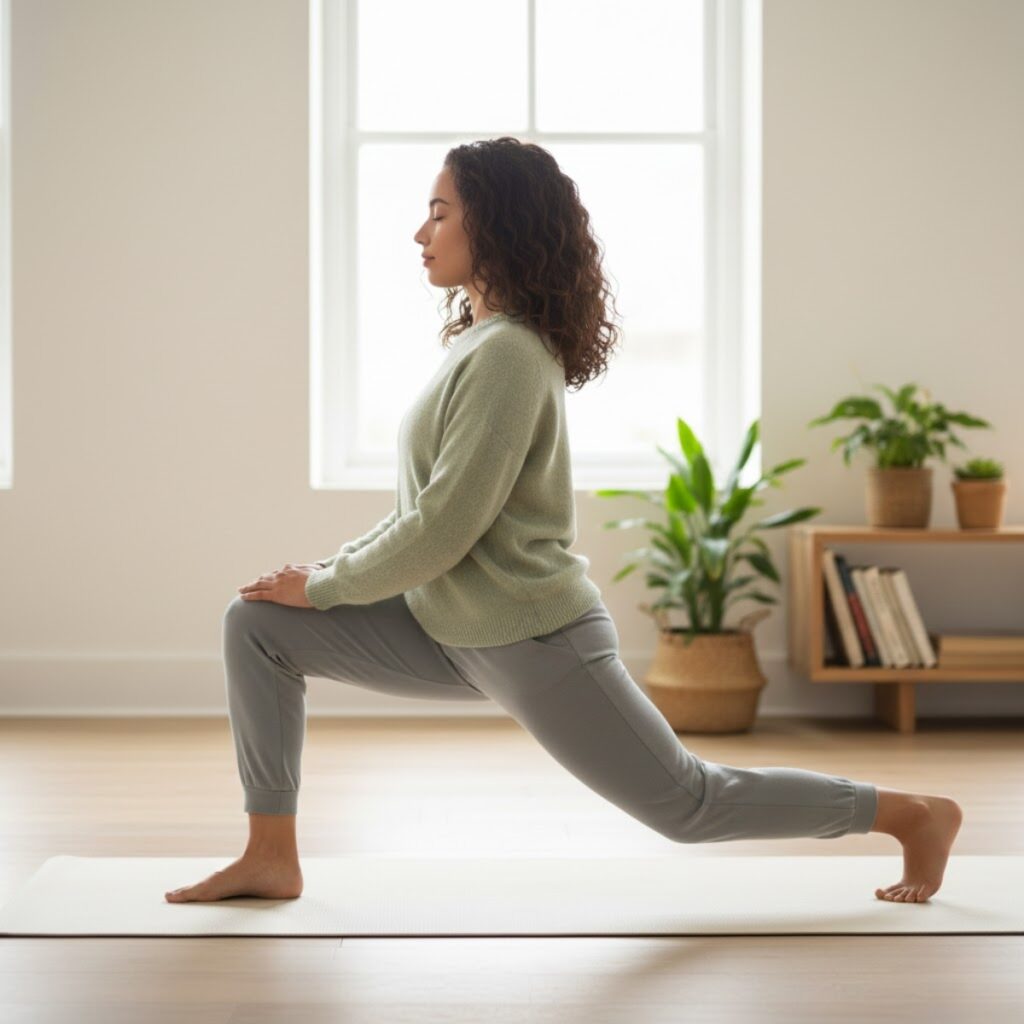
This gentle routine is designed for beginners. Move slowly and rest whenever needed.
Seated Breathing (1 minute)
Sit comfortably. Relax your shoulders. Take slow breaths and notice how your body feels.
Neck and Shoulder Release (1 minute)
Gently move your neck side to side. Roll your shoulders back and down.
Cat-Cow Stretch (1 minute)
Come onto hands and knees. Inhale as you lift your chest slightly. Exhale as you round your back.
Child’s Pose (1 minute)
Sit your hips back toward your heels. Rest your forehead down if comfortable. This pose is a safe resting point during any beginner yoga practice.
Downward Dog (Modified) (30 seconds)
Lift your hips. Bend your knees. Focus on lengthening your spine instead of forcing your heels down.
Mountain Pose (30 seconds)
Stand tall. Feel grounded. Relax your jaw and shoulders.
Forward Fold (Knees Bent) (30 seconds)
Fold forward gently. Keep knees bent to protect your back. Let your head relax.
Low Lunge (30 seconds each side)
Step one foot forward. Keep your back knee down. Stay steady and breathe.
Seated Forward Fold (1 minute)
Sit with legs extended. Fold forward slowly. Use a strap or towel if needed.
Supine Twist (30 seconds each side)
Lie down and twist gently. This releases tension in the spine.
Savasana (2 to 4 minutes)
Lie flat and rest. Let your breath return to normal. This is a powerful part of a mindful beginner yoga practice.
Common Beginner Mistakes (And How to Avoid Them)
Most beginner mistakes come from trying to do too much too soon. Yoga becomes easier when you keep it simple.
Doing Intense Classes Too Early
Fast or advanced classes can lead to strain. Start slow and build gradually. A safe beginner yoga practice is steady, not rushed.
Ignoring Alignment
You do not need perfect alignment, but basic alignment helps protect your joints. Small changes like bending knees or adjusting your stance can make a big difference.
Holding Your Breath
If you notice breath holding, slow down. Breath should guide your movement, not disappear during it.
Comparing Your Practice to Others
Yoga is personal. Your body has its own history and needs. A mindful beginner yoga practice is about your experience, not someone else’s performance.
Benefits of Starting Yoga Mindfully
When you practise consistently and gently, benefits build over time. A beginner yoga practice supports both physical and mental wellbeing.
Physical Benefits
- Improved flexibility and mobility
- Better posture and balance
- Stronger core and legs
- Reduced stiffness in hips, back and shoulders
- Better breathing habits
Mental and Emotional Benefits
- Reduced stress and anxiety
- Better focus and clarity
- Improved sleep quality
- More emotional balance
- A calmer daily routine
These benefits may feel subtle at first, but they become stronger with consistency.
How to Stay Motivated as a Beginner
Motivation comes and goes, but habits stay. The best way to continue is to keep your practice realistic and enjoyable.
To stay consistent with your beginner yoga practice:
- Set small goals, like 10 minutes per day
- Practise at the same time when possible
- Choose calming, beginner-friendly routines
- Allow rest days without guilt
- Celebrate small improvements
Yoga is not about doing more. It is about returning again and again.
You may also read our blog “Yoga in a Natural Setting: A Gentle Path to Wellness with Simar Yoga“
Final Thoughts: Begin Where You Are
Yoga is not something you need to earn. You do not need flexibility, strength, or experience to start. You only need a willingness to begin gently.
A mindful beginner yoga practice is built on patience, safety and awareness. It helps you feel calmer, stronger and more comfortable in your body over time. Even a few minutes a day can create meaningful change.
If you feel unsure, remember this: your first practice does not need to be perfect. It only needs to be kind.
Take a slow breath. Move gently. Stay present.
That is how yoga becomes part of your life.